

Key Takeaways
Summary
24 items · 1-3 hours across multiple rooms
Why Setup Matters Before Day One
Cats are highly sensitive to their environment. Unlike dogs, who often adapt quickly to new spaces through social bonding, cats are territorial animals - they orient themselves through scent, sightlines, and control over their surroundings. Bringing a cat into an unprepared home can trigger stress responses like hiding for days, refusing food, or eliminating outside the litter box.
The good news: a few hours of preparation dramatically improves how smoothly your cat settles in. This checklist walks you through every room, covering hazard removal, essential supplies, and the spatial features cats genuinely need - not just the cute extras.
If you're also setting up for another pet, our first-day readiness checklist for small pets covers similar ground for rabbits, hamsters, and more.
Litter boxes (minimum 2)
Provide adequate elimination options to prevent avoidance behavior, following the one-per-cat-plus-one guideline.
Unscented clumping litter
A texture and scent profile most cats accept readily, reducing the chance of box rejection.
Stable cat tree
Gives cats the vertical territory and observation points they need for security and exercise.
Scratching post or pad
Provides an appropriate outlet for a natural claw-maintenance and territorial marking behavior.
Ventilated pet carrier
Required for safe transport to the vet and for bringing your cat home on adoption day.
Child-proof cabinet latches
Prevent cats from accessing low-level cabinets containing toxic cleaning products or medications.
Separate food and water bowls
Allows proper placement apart from each other and away from the litter area.
Puzzle feeder or interactive toy
Provides mental stimulation and slows eating pace, supporting physical and behavioral health.
Room-by-Room Safety Audit
Before a single toy is unpacked, do a sweep for hazards. Cats explore with their mouths and can squeeze into spaces far smaller than they appear.
Lily Toxicity Is a Veterinary Emergency
All species in the Lilium and Hemerocallis (daylily) genera are acutely toxic to cats and can cause rapid kidney failure. This includes common household varieties like Easter lilies, tiger lilies, and Asiatic lilies. Even ingesting small amounts of pollen, leaves, or water from the vase can be lethal. Remove all lilies from your home entirely before your cat arrives, and do not accept them as cut flowers.
Wobbling Cat Furniture Can Cause Injury
A cat tree or wall-mounted perch that shifts or tips when a cat lands on it will be abandoned - and could injure your cat before that happens. Always assemble cat furniture on a level surface, tighten all bolts fully, and test by applying firm hand pressure from multiple angles before letting your cat use it. Wall-mounted shelves must be anchored into studs, not just drywall.
Kitchen and bathroom: Secure cabinet doors with child-proof latches if you store cleaning products, medications, or trash at low levels. These items are among the most common sources of feline poisoning. Keep toilet lids closed - a kitten can drown in a surprisingly small amount of water.
Living spaces: Audit your houseplants immediately. Lilies (all species in the Lilium and Hemerocallis genera) are acutely toxic to cats and can cause kidney failure even in small amounts. The ASPCA maintains a publicly available list of toxic and non-toxic plants that is worth bookmarking. Also check for dangling blind or curtain cords - these are a documented strangulation risk.
Laundry and storage areas: Check inside the dryer before every use - cats seek warm, enclosed spaces. Store small items like rubber bands, twist ties, and sewing needles out of reach, as ingestion can cause intestinal blockages.
Garage (if accessible): Antifreeze is highly toxic to cats and has a sweet taste that attracts them. Store it in sealed containers on high shelves, and wipe up any spills immediately.
Essential Supplies and Where to Put Them
Location matters as much as the item itself. Here's what to have in place - and why placement is part of the setup.
Safety and Hazard Removal
Litter and Hygiene Setup
Feeding and Water Station
Vertical Space and Enrichment
Vet and Health Preparation
On litter boxes specifically: the general veterinary guidance is one box per cat, plus one extra. So for a single cat, two boxes is the baseline. Place them in quiet, low-traffic areas - never next to the food and water station. Cats that feel ambushed or disturbed at the box will find alternatives. For more on why box setup affects behavior, see our article on common litter box problems and what they signal.
On scratching: cats scratch to maintain claw health, stretch their muscles, and mark territory through scent glands in their paws. A scratching post is not optional. Place it near where the cat will sleep or spend most of its time - that's where cats naturally scratch upon waking. Our guide on why cats scratch and how to redirect it explains what makes a post actually usable to a cat.
Vertical Space and Environmental Enrichment
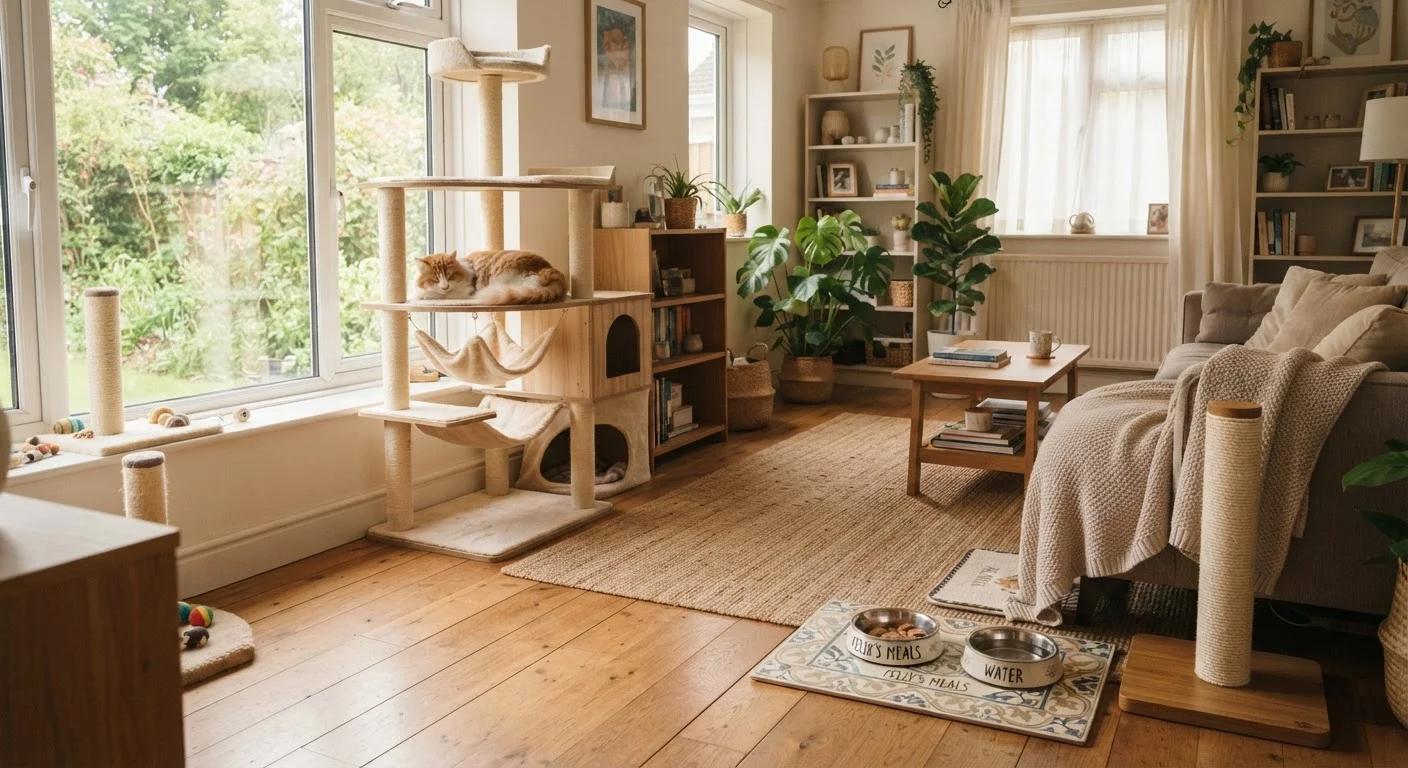
This is the area most first-time cat owners underestimate. Cats are vertical animals - they use height to survey their territory, escape perceived threats, and feel secure. A home with only floor-level furniture is impoverished from a feline perspective.
At minimum, provide one stable cat tree tall enough for your cat to sit above furniture level. Stability is critical: a wobbling or tipping tree will put a cat off using it permanently. If you're assembling flatpack furniture like a cat tree, our guide to solid flatpack assembly covers how to avoid loose joints. Position the tree near a window so the cat has visual access to the outdoors - this alone provides hours of low-key mental stimulation.
Wall-mounted shelves and perches can extend vertical space in smaller homes without taking up floor space. Ensure anything cat-bearing is rated to hold significant weight and anchored into wall studs, not just drywall.
For ongoing enrichment once your cat is settled, our article on keeping indoor cats mentally stimulated covers puzzle feeders, rotating toys, and window setups in more depth.
Setting Up a Safe Room for the First Days
Even a fully prepared home can feel overwhelming to a newly arrived cat. A single dedicated room - a bedroom or spare room, not a bathroom - gives your cat a manageable territory to claim before expanding into the whole house.
Stock the safe room with a litter box, food, water, a hiding spot (a cardboard box with a hole cut in the side works perfectly), and something that smells like you. Keep the door closed for at least the first 24-48 hours, visiting calmly and regularly without forcing interaction.
This approach is especially important if you're introducing a cat into a home with existing pets. The scent-exchange phase that begins in the safe room is foundational to a successful introduction. Our guide on introducing a second cat without conflict details the full phased process.
Find a Vet Before Adoption Day
Many first-time owners wait until there is a problem to find a veterinarian - by which point emergency pricing and limited availability become real obstacles. Contact a local clinic before your cat arrives, confirm they accept new patients, and book a wellness exam for the first week. This initial visit establishes a health baseline, confirms vaccination status, and gives you a professional point of contact for questions as you settle in.
Finally, locate a veterinarian before your cat arrives - not after. Schedule a wellness exam within the first week of bringing your cat home. For a clear picture of what preventive care looks like across your cat's life, see our overview of routine vet care at each life stage.
This article is for general informational purposes only and does not constitute veterinary advice. Consult a licensed veterinarian for guidance specific to your cat's health and needs.