

Key Takeaways
Cat Purring
Purring is a continuous, rhythmic vibration produced by cats as they breathe in and out. It is most commonly associated with contentment, but cats also purr when stressed, injured, or seeking attention. Understanding the context around a purr helps you figure out what your cat is actually communicating.
Purring is generated by rapid movement of the laryngeal muscles, which dilate and constrict the glottis - the part of the larynx that surrounds the vocal cords - during each breath cycle, producing vibrations typically between 25 and 150 Hz.
The Mechanics Behind the Purr
The purr is one of the most distinctively feline sounds in nature - and it is more structurally complex than it seems. Unlike a meow, which is produced only on an exhale, purring happens on both the inhale and exhale, creating that characteristic continuous rumble. The laryngeal muscles in the throat contract rhythmically at a rate of 25 to 150 times per second, rapidly opening and closing the glottis with each breath.
What makes this remarkable is that the purr does not require any conscious effort. Cats can purr while eating, sleeping, or nursing. It appears to be a deeply embedded behavior - kittens begin purring within days of birth, likely as a way to communicate with their mother while nursing, since they cannot meow and feed simultaneously.
For a fuller picture of how cats communicate beyond vocalizations, see our guide to cat body language, which covers tail position, ear angle, and other physical cues.
The Many Reasons Cats Purr
Contentment is the most recognized trigger, but it is far from the only one. Animal behaviorists identify several distinct purring contexts:
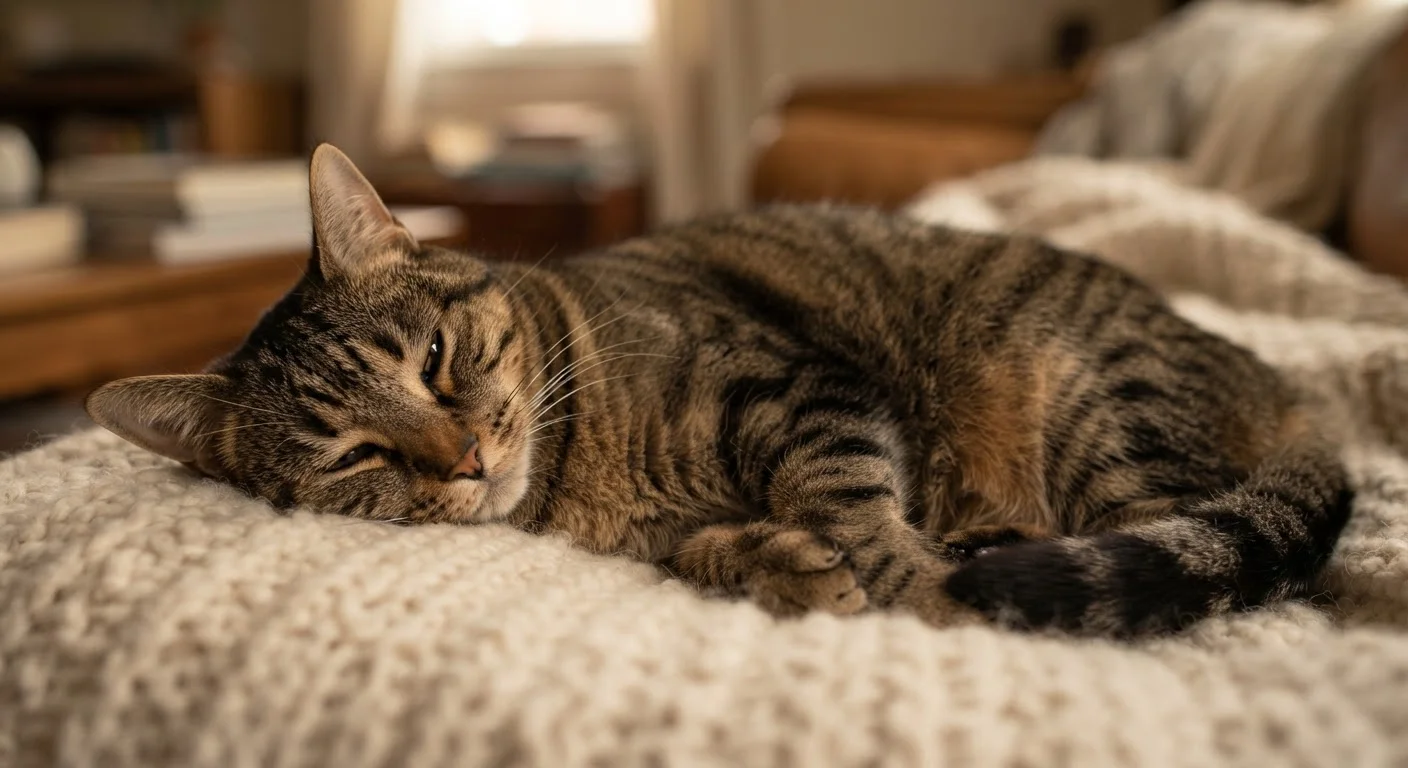
- Contentment: A relaxed cat curled in a warm spot, with loose body language and half-closed eyes, is likely purring out of genuine comfort.
- Solicitation: Cats develop a specialized "solicitation purr" when requesting food or attention. Research by Karen McComb at the University of Sussex found this purr embeds a higher-frequency cry within the rumble - one humans instinctively find more urgent. Most owners recognize it without being able to explain why.
- Stress or fear: Cats at the veterinary clinic frequently purr. This is a self-soothing behavior, not a sign of happiness. A tense body, dilated pupils, or flattened ears alongside purring signals discomfort.
- Illness or pain: Cats may purr when injured or unwell, again likely as self-comfort. Some researchers hypothesize that the vibrational frequency range of purring (25-50 Hz) may promote bone density and tissue healing, which could explain why cats purr during recovery - though this evidence remains preliminary.
“The purr is not a simple happiness signal - it is a multi-purpose acoustic tool that cats deploy across a wide range of emotional and physical states, often in ways that serve their own self-regulation.”
— Karen McComb, Professor of Animal Behaviour and Cognition, University of Sussex
Understanding which type of purr you are hearing depends less on the sound itself and more on everything happening around it.
When Purring Is a Signal to Act
Most purring is benign, but certain combinations of purring and other symptoms deserve attention. Contact a veterinarian if your cat is purring and also:
- Hiding or avoiding interaction for more than a day
- Refusing food or water
- Breathing with visible effort or an open mouth
- Vocalizing in an unusual, distressed way alongside the purr
- Showing physical signs like limping, swelling, or a change in grooming habits
Track Your Cat's Purring Baseline
Spend a week noting when your cat purrs, for how long, and in what context. This baseline makes it far easier to spot changes that might warrant a vet visit. Even a brief log on your phone can be genuinely useful during a veterinary consultation.
It is also worth noting that a cat that has stopped purring when it previously did so regularly may be worth monitoring. Changes in baseline behavior - not just unusual behavior - are often the earliest indicators that something is off.
Because purring is just one channel cats use to communicate, pairing it with other signals gives you a much clearer picture. Our article on how cats show affection covers the quieter bonding behaviors that often accompany a content purr.
Building Fluency in Your Cat's Purr
Every cat has its own purring personality. Some cats are near-silent purring machines you feel more than hear; others can be audible across a room. Getting to know your individual cat's baseline - when they typically purr, how loud, and in what situations - makes it much easier to notice when something is different.
A useful habit: whenever your cat purrs, do a quick three-point check. Note their posture (loose or tense?), their eyes (soft or wide?), and their location (comfortable spot or unusual hiding place?). These three cues, combined with the purr, will tell you most of what you need to know.
If you are still building your overall feline communication skills, it may help to start with separating cat myths from science - many assumptions first-time owners bring to purring are rooted in folklore rather than evidence.
This article is for general informational purposes only and does not constitute veterinary or medical advice. If you are concerned about your cat's health or behavior, consult a licensed veterinarian.