

Key Takeaways
Hidden Fees in Travel Booking
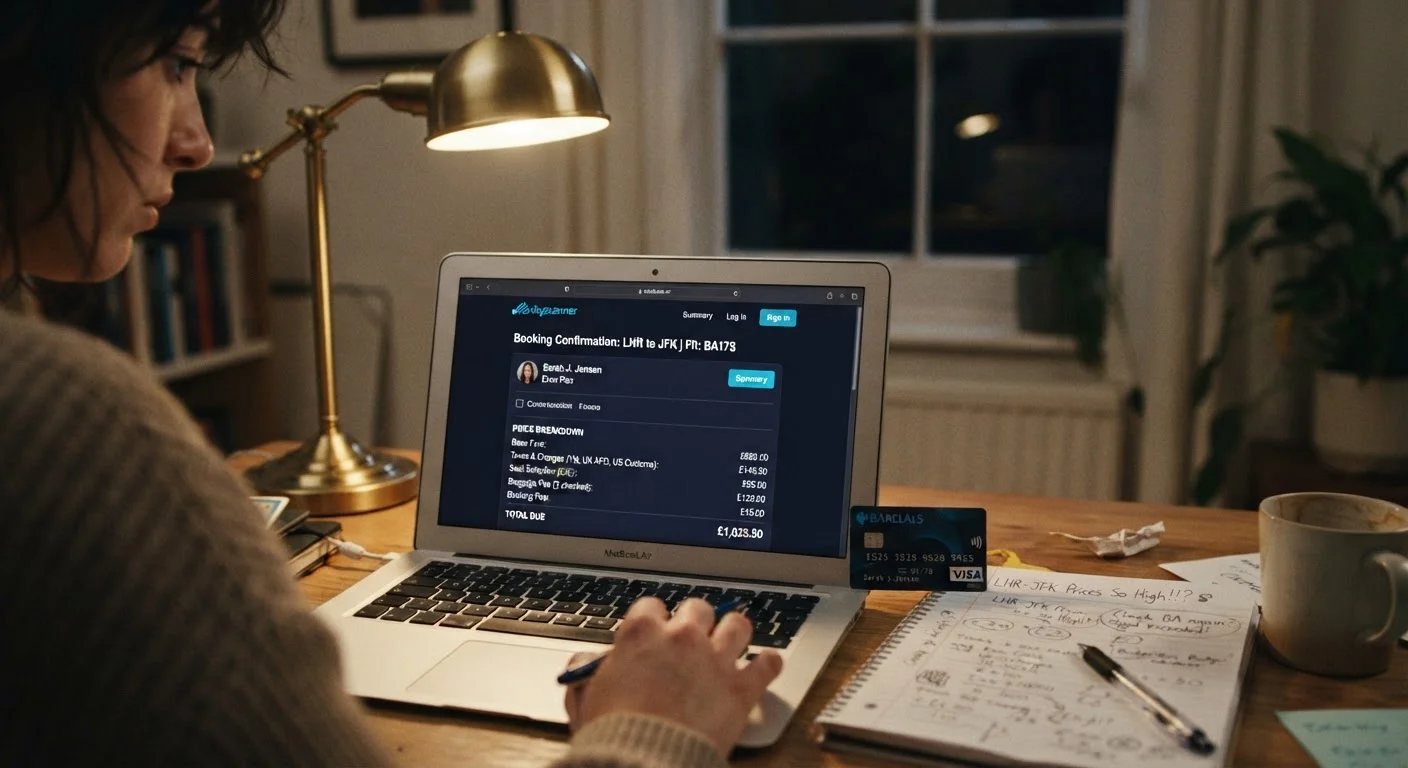
Hidden fees are charges added to a base travel price that aren't immediately visible when you first see an advertised rate. They appear at checkout - or sometimes after booking - and can include baggage fees, seat selection costs, resort fees, and service charges. The gap between the advertised price and the final amount you pay is sometimes called the "price spread."
In the US, the Department of Transportation requires airlines to display the total ticket price (including government taxes) in most fare advertisements, but ancillary fees like checked bags and seat upgrades are excluded from this mandate.
Why the Sticker Price Is Just the Starting Point
Advertised travel prices are essentially marketing numbers. Airlines and hotels both operate in a competitive market where the first number a customer sees needs to look attractive - so mandatory extras get pushed downstream to checkout, or buried in fare class fine print. Understanding this dynamic is the first step toward accurate budgeting.
This isn't just an inconvenience. A flight listed at $89 can realistically cost $150+ once you add a checked bag, a seat assignment, and a travel insurance upsell. A hotel room priced at $120 per night can tip past $170 after taxes, a resort fee, and a parking charge. See how these charges fit into the full picture of trip costs before you commit to anything.
$7.0B+
US airline baggage fee revenue (2023)
According to the Bureau of Transportation Statistics, US airlines collected over $7 billion in baggage fees in 2023 alone, illustrating how central these charges have become to airline business models.
$3.8B+
US airline cancellation and change fee revenue (2022)
The Bureau of Transportation Statistics reported that US carriers collected billions in reservation change and cancellation fees in 2022, even after pandemic-era policy relaxations.
$20-$50
Typical nightly resort fee range
Consumer research and travel industry analyses consistently show resort or destination fees at US properties averaging $20-$50 per night, with some luxury and Las Vegas properties exceeding $50.
The Most Common Flight Fee Traps
Airlines have systematically unbundled what used to be included in a standard ticket. Here's where the charges tend to pile up:
- Checked baggage fees: Many domestic carriers charge $30-$40 for the first checked bag each way. On a round trip for two travelers, that's $120-$160 before you've left the airport.
- Carry-on bag fees: Basic Economy fares on several major US airlines now restrict carry-ons to a personal item only. Adding a standard carry-on can cost $25-$60, sometimes more if done at the gate.
- Seat selection: Choosing any specific seat - including standard ones, not just extra legroom - often costs $10-$50 per seat per segment. Declining means you're assigned a seat at check-in, which might separate travel companions.
- Change and cancellation fees: While many airlines relaxed these during the pandemic, Basic Economy fares frequently remain non-refundable and non-changeable. Read the fare rules tab, not just the headline price.
- Booking fees on third-party sites: Some aggregators add a service fee that doesn't appear until the final payment screen.
The timing of your booking also influences which fee structures you encounter - earlier bookings sometimes offer more flexible fare classes.
Compare Fare Classes, Not Just Prices
When comparing flights side by side, click into the fare rules for each option before deciding. Two flights at similar prices can have completely different baggage allowances, seat selection policies, and change conditions. The fare class - not the base price - tells you what you're actually getting. A few extra minutes here prevents a lot of unpleasant surprises at the airport.
Hotel and Accommodation Charges That Sneak Up on You
Hotels have their own fee playbook, and it's equally layered. The most significant categories to watch for:
- Resort fees / destination fees: These mandatory daily charges - typically $20-$50+ per night at resort-adjacent or urban properties - are added after the nightly rate and cover amenities like pool access, gym use, and in-room Wi-Fi. You pay them regardless of whether you use any of those amenities.
- Parking fees: Urban hotels routinely charge $30-$60 per night for on-site parking. This can double what seemed like a bargain rate if you're driving.
- Wi-Fi fees: Though less common now, some properties still charge for in-room internet, especially older business-class hotels.
- Early check-in / late check-out fees: Standard check-in is typically 3-4 PM. Arriving earlier or leaving later can trigger fees of $25-$75 if not negotiated in advance.
- Cleaning fees on short-term rentals: Platforms hosting private rentals often show a low nightly rate but add a cleaning fee that can equal one or two nights' rent on a short stay.
Always expand the "taxes and fees" line before confirming any accommodation booking. That single click is one of the most effective habits you can build. For a systematic approach, see the pre-trip planning checklist built for budget-conscious travelers.
How to Read the Real Price Before You Book
The practical fix is straightforward, even if it requires a bit more patience during the booking process:
- Always go to the final checkout screen. Most mandatory fees only appear at the last step. Do this on multiple platforms before choosing where to book.
- Add expected ancillary costs manually. If you know you'll need a checked bag, add the airline's published baggage fee to each fare you're comparing. Don't compare base prices apples-to-apples when the included perks differ.
- Search the hotel name plus "resort fee" or "destination fee" before booking - many properties publish their fee schedules in FAQs or on review sites.
- Check cancellation policies separately from price. A slightly higher refundable rate can be worth more than a cheaper non-refundable one, depending on your trip certainty.
This kind of diligence connects directly to why cheap trips often end up costing more - the lowest advertised price frequently carries the highest fee burden.