

Key Takeaways
Option A
New York City
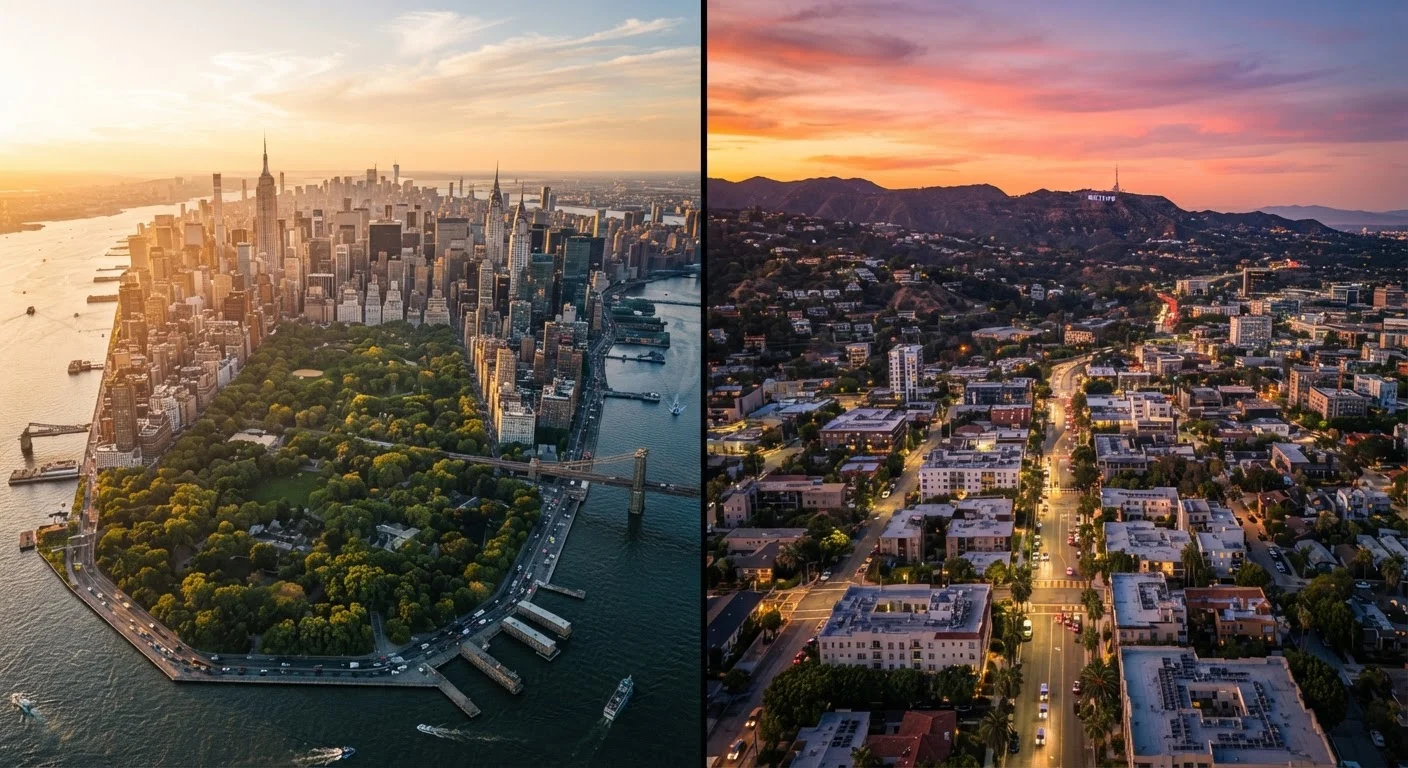
The dense, electric, walk-everywhere urban experience.
Best for: Travelers who thrive on fast-paced exploration, world-class transit, and a packed itinerary of culture, food, and neighborhoods on foot.
Option B
Los Angeles
The sprawling, sun-soaked city built for discovery at your own pace.
Best for: Travelers who want outdoor access, beach time, and a more relaxed atmosphere - and don't mind driving to piece it all together.
If you want to explore without renting a car
New York City
NYC's subway and bus network covers virtually every major attraction. You can spend a full week navigating efficiently without ever needing a vehicle.
If outdoor space and warm weather are priorities
Los Angeles
LA's year-round mild climate, Pacific beaches, and proximity to hiking trails make it genuinely hard to match for travelers who want sun and open air daily.
If you want dense culture, museums, and live performance in one trip
New York City
From Broadway to world-class museum clusters to live jazz venues, NYC concentrates an extraordinary range of cultural institutions within walking or subway distance.
If you prefer a slower, more flexible itinerary
Los Angeles
LA's layout encourages a looser schedule - linger at a farmers market, drive the coast, or spend an afternoon in a single neighborhood without feeling like you're missing something urgent.
If you're traveling on a tighter daily budget
New York City
Paradoxically, NYC's density means free and low-cost options - public parks, free museum days, cheap food carts - are clustered and easy to stack into a day without a rental car adding expense.
The Fundamental Difference: Density vs. Sprawl
Before comparing price tags or attraction lists, understand the structural difference that shapes everything else: New York City is vertical and dense; Los Angeles is horizontal and sprawling. Manhattan alone packs more restaurants, museums, and neighborhoods into a few square miles than most American cities contain altogether. LA, by contrast, stretches across roughly 500 square miles with dozens of distinct communities - Venice, Silver Lake, Koreatown, Pasadena - each feeling like its own small city.
That distinction drives nearly every practical decision a traveler makes. In NYC, you might walk from a morning museum visit to an afternoon food market to an evening show without setting foot in a vehicle. In LA, those same three activities could involve 45 minutes of driving each way. If that kind of logistics sounds tiring rather than adventurous, NYC likely fits your style better. If the idea of flexibility and discovery by car sounds freeing, LA may be your answer.
For a useful parallel, consider how car ownership itself shifts depending on your environment - something our guide on owning a car in a city vs. the suburbs explores in depth.
| Criterion | New York City | Los Angeles |
|---|---|---|
| Getting around | Subway + walking | Car or ride-share typically needed |
| Climate | 4 distinct seasons | Mild and sunny year-round |
| Geographic footprint | Dense, compact | Vast, sprawling |
| Cultural density | Extremely high per square mile | High but dispersed |
| Beach access | Possible but distant | Easily accessible |
| Hiking & outdoor access | Parks within city; mountains farther out | Trails and coast within 30-60 minutes |
| Typical itinerary style | Structured, walkable | Flexible, drive-based |
Getting Around: Transit, Traffic, and the Cost of Movement
NYC's Metropolitan Transportation Authority (MTA) subway runs 24 hours and reaches virtually every borough. A single ride costs a flat fare, and unlimited weekly passes make extended trips genuinely affordable. For budget-conscious travelers, not renting a car in New York isn't just viable - it's often the smarter financial call.
LA's public transit system, operated by Metro, has expanded significantly in recent years with light rail and bus rapid transit lines, but coverage gaps remain real. Without a car, large portions of the city - including many popular coastal and canyon areas - stay out of reach. Rental car costs, parking fees, and the time spent in traffic all factor into the true cost of an LA trip. That said, ride-share services and Metro can cover a lot of ground if you plan strategically.
245+
NYC subway stations in operation
The MTA subway system serves all five boroughs with over 245 stations, making car-free exploration genuinely practical for most visitors.
~500 sq mi
Los Angeles city area
LA covers roughly 503 square miles, compared to NYC's approximately 302 - a difference that fundamentally shapes how travelers move through each city.
284 days
Average sunny days per year in LA
According to US Climate Data, Los Angeles averages around 284 sunny days annually, far above the national average of about 205.
Planning how you'll get to each city matters too. Both NYC (via JFK, LaGuardia, and Newark) and LA (via LAX and Burbank) are major domestic and international hubs, so flight options are plentiful. Our breakdown of direct flights vs. layovers can help you think through the trade-offs before booking.
Climate, Neighborhoods, and What You'll Actually Do
Weather shapes the entire experience. NYC has four distinct seasons: brutal winters with wind and snow, humid summers, and spectacular springs and autumns. Visiting in January means layering heavily; August means humidity and heat. LA, meanwhile, operates on a narrow climatic band - sunny and mild most of the year, with the occasional Santa Ana wind event or marine layer morning. There's little weather roulette involved in planning an LA trip.
Culturally, both cities punch far above average. NYC's concentration of Broadway theaters, flagship museums (Metropolitan Museum of Art, MoMA, the Natural History Museum), and neighborhood food scenes is unmatched in the US for sheer density. LA counters with the Getty Center, world-class street food, an extraordinarily diverse restaurant landscape, and the Pacific Coast Highway at your doorstep. The question isn't which city has more to offer - it's which kind of discovery excites you more.
Geography plays a quieter but real role in how destinations feel in practice. Our piece on why some destinations feel so different up close digs into how physical landscape shapes a traveler's lived experience - worth a read before either trip.
Finally, consider your pacing preference. If a dense, structured itinerary energizes you, explore our thinking on slow travel vs. multi-destination trips to decide whether you want one city or several on your next journey.