

Key Takeaways
Our Verdict
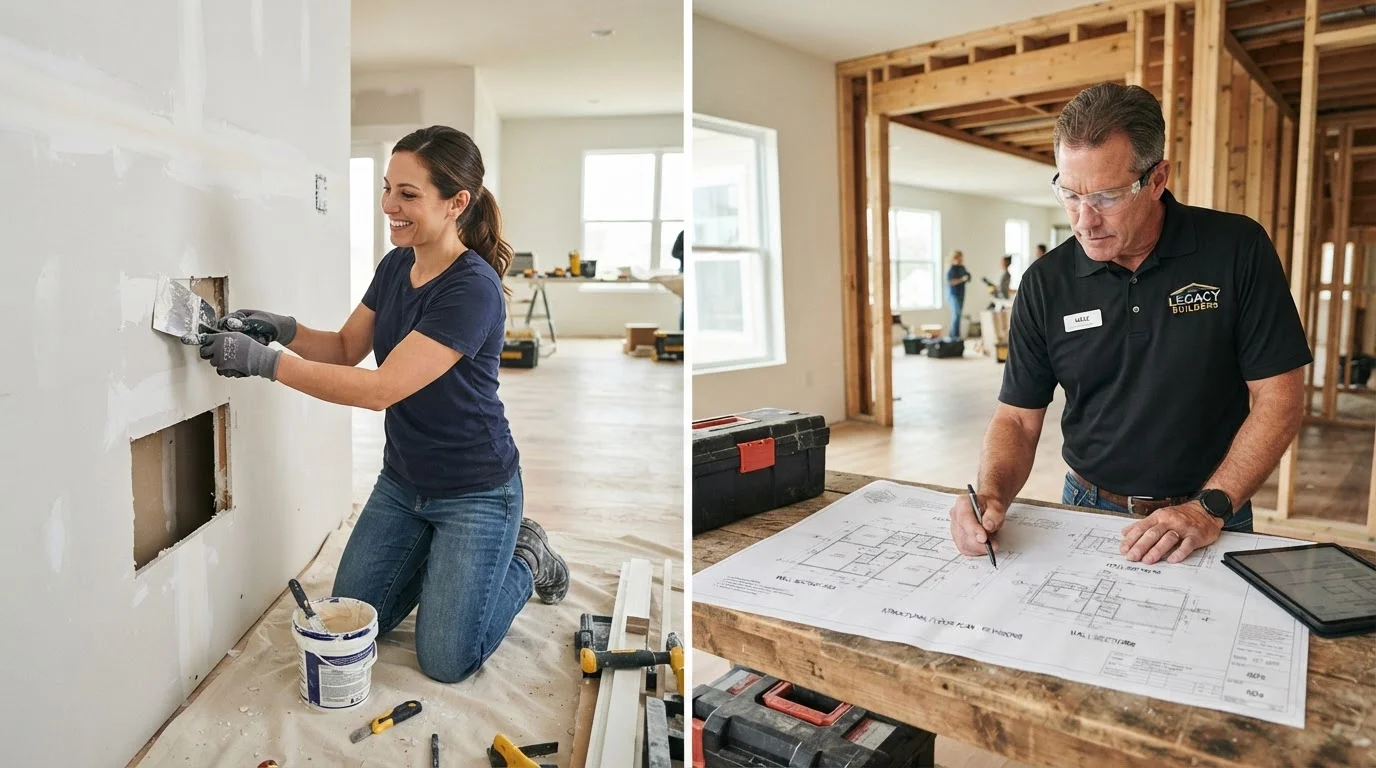
Interior wall work spans a wide spectrum - from genuinely beginner-friendly tasks like filling nail holes and repainting to complex, regulated work that only licensed trades should handle. The dividing line is usually safety, permits, and irreversibility. Getting clear on which side a project falls saves you from costly mistakes and code violations.
| Best for | Recommended |
|---|---|
| First-time homeowners or renters wanting to refresh a space on a budget | DIY cosmetic work |
| Those dealing with structural changes or load-bearing walls | Licensed structural engineer or contractor |
| Projects involving electrical outlets, switches, or in-wall wiring | Licensed electrician |
| Intermediate tasks like hanging heavy features or tiling a feature wall | DIY with careful research and proper tools |
Why the DIY vs. Pro Line Matters for Wall Projects
Wall projects feel deceptively approachable - a coat of paint here, a patch there. But walls are part of a building system that can conceal wiring, plumbing, and structural supports. Getting it wrong isn't just aesthetically frustrating; it can create safety hazards, fail inspections, or void homeowner's insurance.
The key factors that determine whether a wall project is DIY-appropriate are: skill level required, tools needed, permit requirements, and risk of damage or injury. For a broader decision-making approach across all home tasks, see the DIY vs. tradesperson decision framework.
Use the comparison below as a starting point - then factor in your own confidence, local building codes, and the specifics of your home's construction.
| Project | DIY-Friendly? | Permit Typically Required? | Risk Level | |
|---|---|---|---|---|
| Patching small drywall holes | Yes | No | Low | |
| Painting interior walls | Yes | No | Low | |
| Hanging floating shelves | Yes (with studs) | No | Low-Medium | |
| Non-load-bearing partition wall | Intermediate | Check local codes | Medium | |
| Removing a load-bearing wall | No - hire a pro | Yes | High | |
| In-wall electrical work | No - licensed electrician | Yes | High | |
| In-wall plumbing changes | No - licensed plumber | Yes | High | |
| Mold remediation (large area) | No - certified remediator | Sometimes | High |
Projects Most Beginners Can Handle Confidently
These tasks require basic tools, carry low risk if done carefully, and don't typically need permits. They're where most first-timers should start building their skills.
Patching Small to Medium Holes
Nail holes, small dents, and openings up to about six inches in drywall are well within reach for most people. Spackling compound handles minor imperfections; a drywall patch kit covers larger gaps. Our detailed walkthrough on fixing wall holes without a contractor covers the full process step by step.
Painting Interior Walls
Repainting is the most universally accessible wall project. The preparation is where most beginners stumble - taping, priming, and cleaning surfaces matter more than the paint itself. See our guide on prep steps most people skip before painting to avoid patchy, peeling results.
Installing Floating Shelves on Drywall
Lightweight shelves anchored into studs (the vertical wooden framing members inside your wall) are manageable for beginners. A stud finder, level, and appropriate wall anchors are essential. Avoid overloading shelves - always respect the weight limits stated by the anchor manufacturer.
Applying Wallpaper or Peel-and-Stick Panels
Peel-and-stick options are forgiving and removable. Traditional wallpaper requires more precision but no specialist licensing. This is a good project for building patience and attention to detail.
Test Before You Commit
Before applying wallpaper, peel-and-stick panels, or any surface treatment to a full wall, test a small section in an inconspicuous corner first. This reveals adhesion issues, color mismatches, or surface problems before you've committed to the whole wall. It's a small step that saves significant rework time.
Projects That Require a Licensed Professional
These jobs involve systems or structural elements where errors can be dangerous, expensive to fix, or illegal without proper permits and inspections.
Moving or Removing Load-Bearing Walls
A load-bearing wall supports the weight of the structure above it - floor joists, roof framing, or upper stories. Removing or modifying one without proper structural assessment can cause partial collapse. This work requires a structural engineer's evaluation and, in most jurisdictions, a building permit. Never assume a wall is non-load-bearing without professional confirmation.
In-Wall Electrical Work
Running new circuits, relocating outlets, or installing in-wall speaker or data cables that connect to your electrical panel must be done by a licensed electrician in most U.S. states. Unpermitted electrical work is a documented fire risk and can complicate home sales.
In-Wall Plumbing Modifications
Relocating or adding plumbing lines inside walls - for a bathroom addition or kitchen remodel - involves pipe connections to your home's main supply and drain system. This typically requires permits and licensed plumber sign-off.
Always Check for Asbestos in Older Homes
If your home was built before the mid-1980s, wall materials - including joint compound and textured coatings - may contain asbestos. Opening walls in these homes without testing first can release hazardous fibers. Have suspect materials tested by a certified inspector before any demolition or modification work begins.
Mold Remediation Behind Walls
If you discover mold while opening up a wall - particularly covering an area larger than about ten square feet - professional remediation is recommended. Disturbing large mold colonies without proper containment spreads spores throughout the home.
The Middle Ground: Intermediate DIY With Research and Preparation
Some projects fall between obvious DIY and obvious pro territory. With the right tools and careful research, confident beginners can manage them - but they require more planning.
- Tiling a feature wall: Achievable with patience. Requires proper adhesive, grout, and surface prep, but no permits in most cases.
- Installing a wall-mounted TV bracket: Straightforward if you locate studs correctly and use appropriate hardware for the TV's weight.
- Adding a non-load-bearing partition wall: Building a simple interior divider (not structural) is manageable for a motivated DIYer, though some municipalities still require permits - always check local codes first.
- Insulating an exterior wall cavity: Blown-in or batt insulation can be DIY-friendly in some situations, but disturbing walls in older homes may expose asbestos or lead paint, which immediately elevates the project to professional territory.
For any of these intermediate projects, consider whether specialized tools are needed. The renting vs. buying tools guide can help you avoid over-investing in equipment you'll use once. And before starting, it's worth checking the common DIY myths that trip up beginners - some widely shared assumptions about wall work are simply wrong.
The Home Maintenance hub is also a useful reference for understanding what regular upkeep looks like across your whole home.