

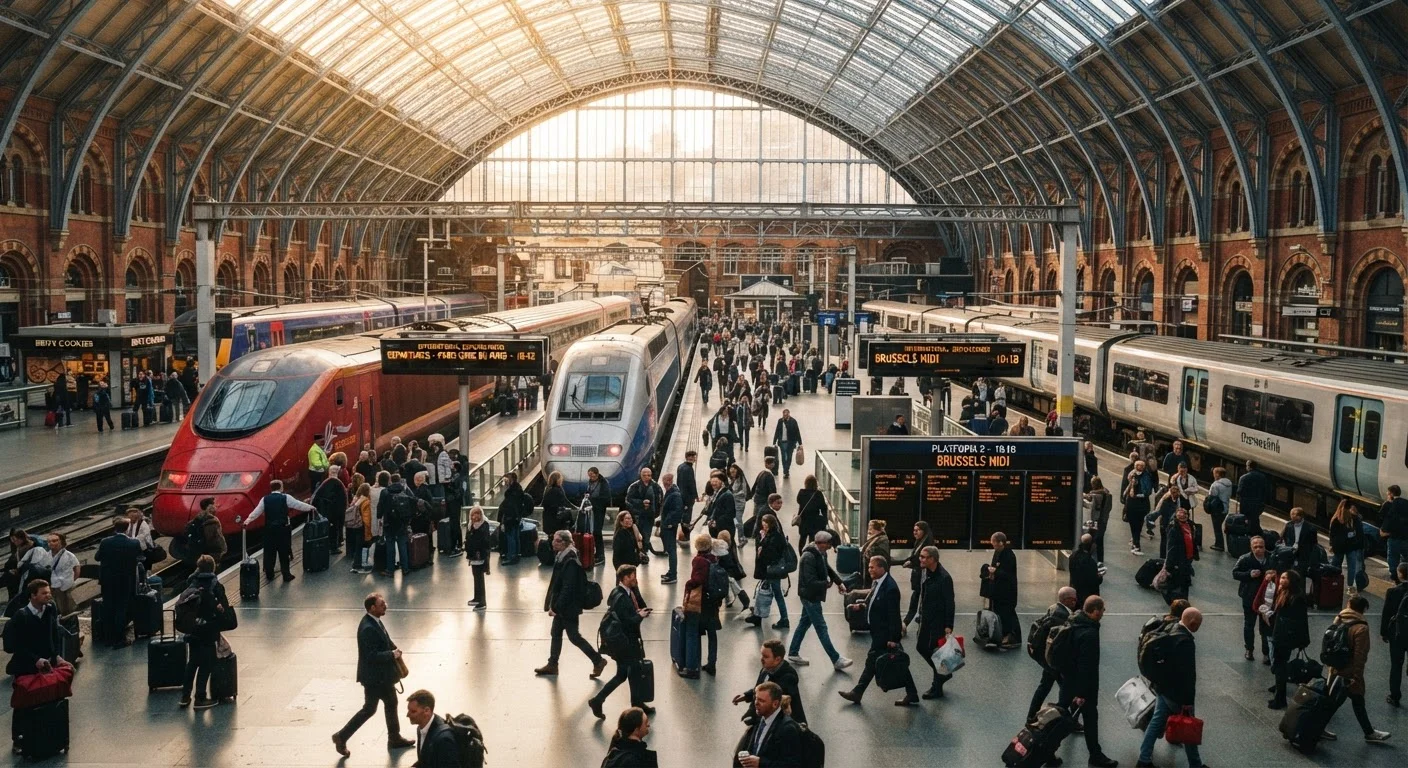
The Three Pillars of Overland Travel
Once your flight lands, a whole new set of decisions kicks in. Ground transport is where most travelers either hemorrhage budget or quietly save a fortune - and the difference usually comes down to knowing your options before you arrive. This reference breaks down the three dominant overland modes: rail, coach/bus, and rideshare (including app-based and informal shared taxis). Each has a distinct cost profile, comfort range, and best-use scenario.
For a fuller picture of how transport fits into your overall trip spend, see how travel budgets work. And if you're navigating an unfamiliar city on top of this, getting around without speaking the language is worth a read too.
Rail: Speed, Scenery, and Smart Booking
Passenger rail ranges from budget overnight sleepers to high-speed corridors that rival short-haul flights for city-center convenience. In Europe, a network of intercity trains connects most major destinations; in parts of East and Southeast Asia, rail is often the single most practical way to cover distance. In the US, Amtrak serves many routes but tends to be slower and pricier per mile compared to international peers.
What to Know Before You Book
- Advance booking windows: Rail tickets - especially high-speed and sleeper classes - often cost significantly less when booked weeks ahead. Flexible or open-date tickets exist but carry a premium.
- Pass vs. point-to-point: Multi-country rail passes can deliver value for travelers covering many destinations quickly, but are often outpaced in value by point-to-point tickets for shorter or slower itineraries. Always compare both options for your specific route.
- Seat classes: Second class on most European and Asian rail systems is clean, comfortable, and perfectly serviceable for daytime trips. First class rarely doubles in comfort for the price jump.
- Overnight trains: A couchette or sleeper berth combines transport and accommodation, which can offset its higher ticket price when you factor in a night's lodging you don't need to book.
Buses and Coaches: The Underrated Budget Workhorse
Long-distance buses - called coaches in many countries - are the backbone of budget travel on nearly every continent. They are almost always cheaper than equivalent rail, and on routes without a direct train connection, they're often the only viable overland option. Quality varies enormously: a luxury overnight coach in Latin America or Southeast Asia can include reclining seats, air conditioning, and onboard snacks, while a local minibus may be crowded and unpredictable on timing.
Couchette
A fold-down bunk berth in a shared overnight train compartment, typically cheaper than a private sleeper cabin. Standard in European and some Asian rail networks.
Collectivo
A shared taxi or minibus that runs a fixed route and charges a per-seat fare. Common across Latin America and parts of the Caribbean.
Ride-hailing
App-based private or shared car services where you book, track, and pay via smartphone. Distinct from traditional taxis in pricing transparency and booking method.
Rail pass
A prepaid ticket granting unlimited or limited rail travel within a region or country over a set number of days. Value depends heavily on how many journeys you actually take.
Express coach
A long-distance bus service with few or no intermediate stops, typically running on a fixed timetable with reserved seating.
Dynamic pricing
A fare model where prices fluctuate in real time based on demand, time of day, and availability. Common in ride-hailing apps and some rail booking platforms.
Key Distinctions to Make
- Express vs. local: Express buses skip intermediate stops and run closer to schedule. Local buses are cheaper but slower and more crowded.
- Tourist buses vs. local networks: In many destinations, operators market buses specifically to international travelers. These are convenient but usually more expensive than using the same local bus network that residents use.
- Night buses: Like overnight trains, night buses can save a night's accommodation cost. Confirm the safety record of operators on less-traveled routes and verify luggage security arrangements before booking.
For region-specific cost benchmarks, the region-by-region cost overview breaks down what to expect in each part of the world.
Rideshares and App-Based Transport: Flexibility at a Price
App-based rideshare services operate in most major cities worldwide, though the dominant platforms vary by country. Ride-hailing apps give you upfront fare estimates, GPS tracking, and a digital receipt - all of which are genuinely useful safety and budgeting tools when traveling. Informal shared taxis (collectivos, matatus, marshrutkas, and similar) are a local staple across much of Africa, Latin America, Central Asia, and the Middle East: they run fixed routes, depart when full, and charge a fraction of a private hire.
Practical Guidance
- Download apps before you land: Many ride-hailing platforms require a local phone number or verification step. Setting up accounts with your home number while on Wi-Fi saves friction at the airport.
- Surge pricing: Airport arrivals, major events, and peak evening hours often trigger dynamic fare increases. A short walk to a non-airport pickup zone or a brief wait can reduce your fare noticeably.
- Shared rides: Where available, carpooling options within apps cut costs and are generally safe in well-regulated markets. Assess platform reputation in each country individually.
- Informal shared taxis: These are legitimate, widely-used transport in many regions. Ask guesthouse staff or local contacts about the standard fare for your route before boarding to avoid overpaying.
Pairing smart ground transport choices with other daily spending habits goes a long way - budget travel fundamentals for first-timers covers the full picture.
Choosing the Right Mode: A Quick Decision Framework
No single transport mode wins every time. Here's a straightforward way to think through the choice:
- Distance and time: Under 3 hours, local buses are usually fine. Over 6 hours, a train or overnight bus often makes more sense than burning daylight.
- Budget priority: Bus beats rail on price in most markets. Rideshares are convenient but not the economy option for longer distances.
- Convenience vs. cost tradeoff: Rail stations and bus terminals are usually central; airports are rarely so. Factor total journey time, including transfers.
- Safety context: Check your government's official travel advisory for the destination country and review ground transport safety conditions before choosing less-regulated options. Always verify current entry, visa, and local transit rules through official government sources before traveling.
Ground transport decisions ripple into every other part of a trip - from daily food budgets to how much time you actually spend experiencing a place. See how to eat well abroad without overspending for the next logical piece of the puzzle. Explore destination-specific transport details in the Destination Guides hub.